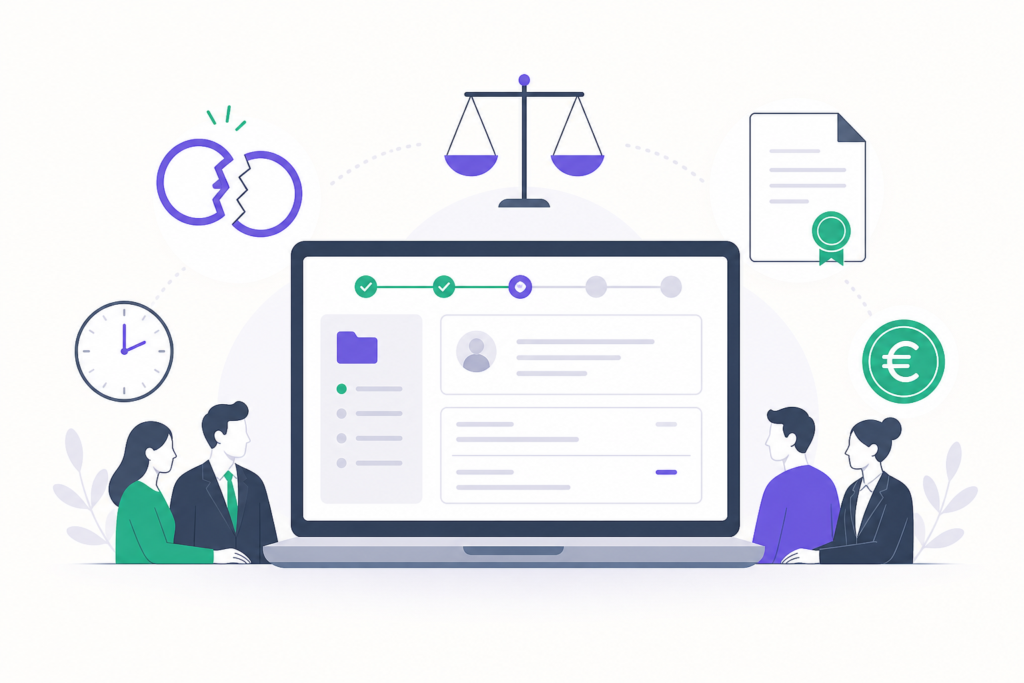
Compliance automation, or automatic compliance, is a revolutionary concept that is transforming the way companies manage their legal and regulatory obligations. In the digital age, integrating automation technologies into compliance strategies is not just a question of efficiency, it’s an absolute necessity to remain competitive and compliant with ever-changing standards.
What is compliance automation?
The concept ofcompliance automation is based on the use of advanced technological tools to simplify, standardize and automate processes linked to corporate regulatory compliance. This approach not only increases the efficiency and accuracy of compliance operations, but also significantly reduces the risk of human error and non-compliance.
The Key Advantages of Automation
The use of automated solutions for compliance management offers a range of benefits such as resource optimization and cost reduction. Solutions such as legal project management and legal analytics are examples of how artificial intelligence andlegal Big Data are contributing to the evolution of compliance.
Consistency and precision
Thanks to automation, systems can apply uniform compliance standards throughout the organization, helping to keep policies and practices consistent and up-to-date with the latest regulations.
Time-saving and efficient
By reducing the workload associated with repetitive compliance checks, automated tools free up legal teams’ time for higher value-added tasks.
Cost reduction
Automation minimizes the need for costly manual intervention, enabling companies to make significant savings, both in terms of time and budget.
Technologies Involvement in Compliance automation
Technological innovations such asnatural language processing, blockchain and smart contracts are playing a key role in advancing compliance automation.
Artificial Intelligence (AI)
AI can analyze large amounts of regulatory data quickly and accurately, enabling instant compliance assessments and valuable predictions about potential risks.
Blockchain and Smart Contracts
Blockchain provides a secure, unalterable environment for storing compliance data, while smart contracts enable contractual clauses to be executed when predetermined conditions are met, thus ensuring contractual compliance.
Steps towards adoption of Automation
To integrate automation into compliance processes, it’s crucial to assess current operations, identify areas for improvement, and implement the right technologies. Companies can rely on LegalTech platforms and automated legal advice experts for this transformation.
Frequently asked questions
Here is a list of frequently asked questions about compliance automation.
What are the main challenges in automating compliance?
The main difficulties often lie in the initial budget required for adoption, aligning technologies with business processes, and ensuring that the entire organization is kept informed of changes.
How does automation impact the roles of compliance professionals?
It changes their role by directing them towards strategic supervision and analytical work, thus reducing their repetitive administrative activities.
Can we rely entirely on automation for compliance?
While automation considerably improves efficiency and reduces the risk of error, human supervision is needed to manage complex and unprecedented situations that require flexibility and discernment.